Lake Kournas
A Jewel of Crete
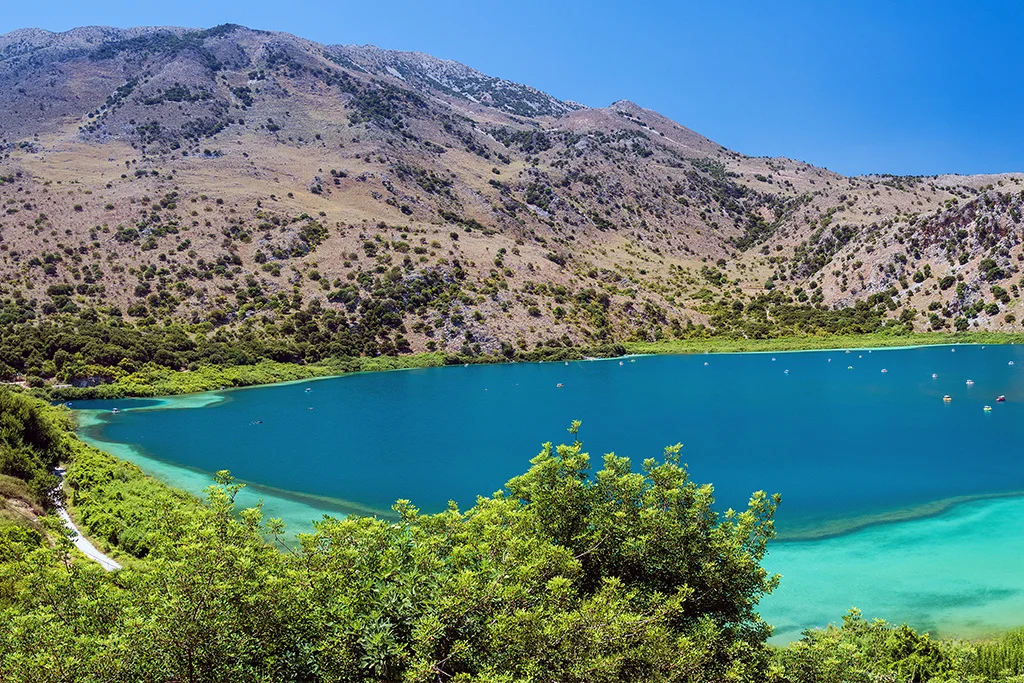
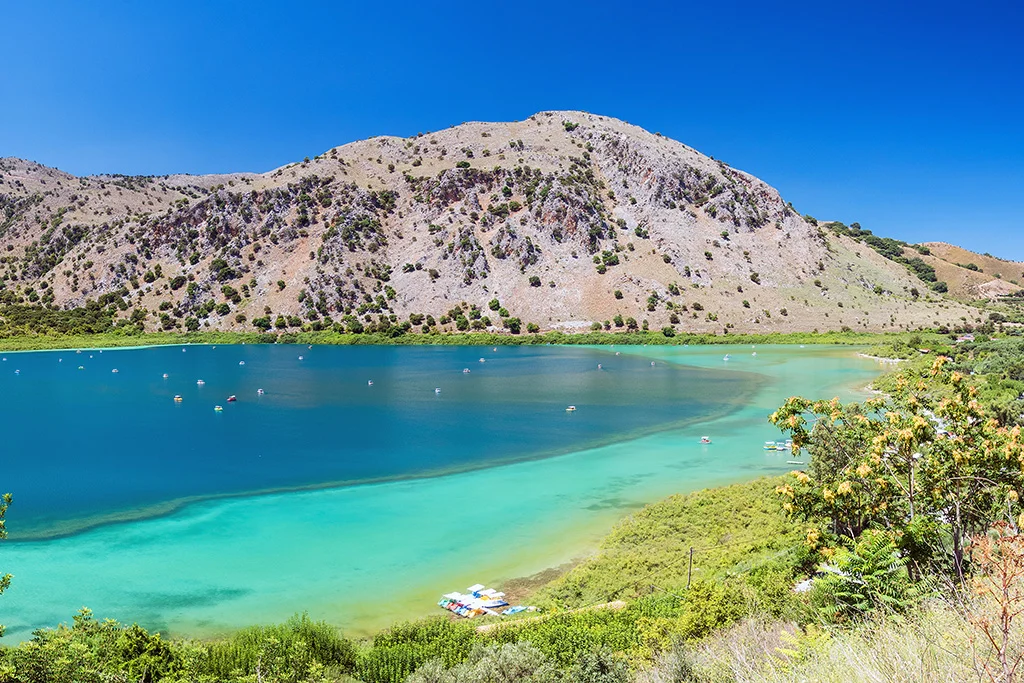
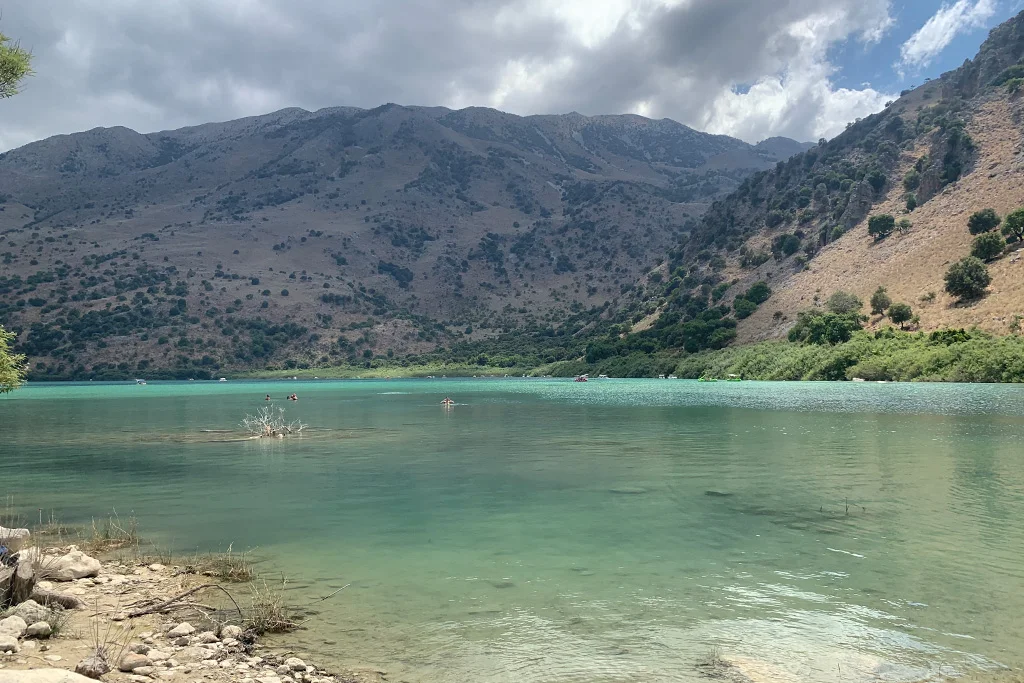
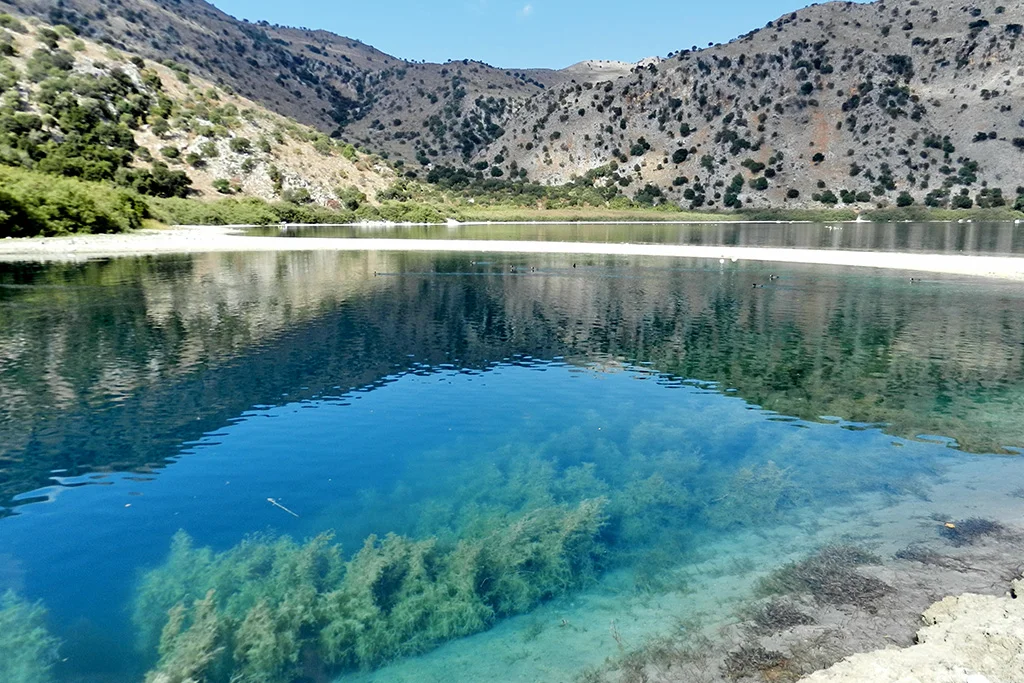
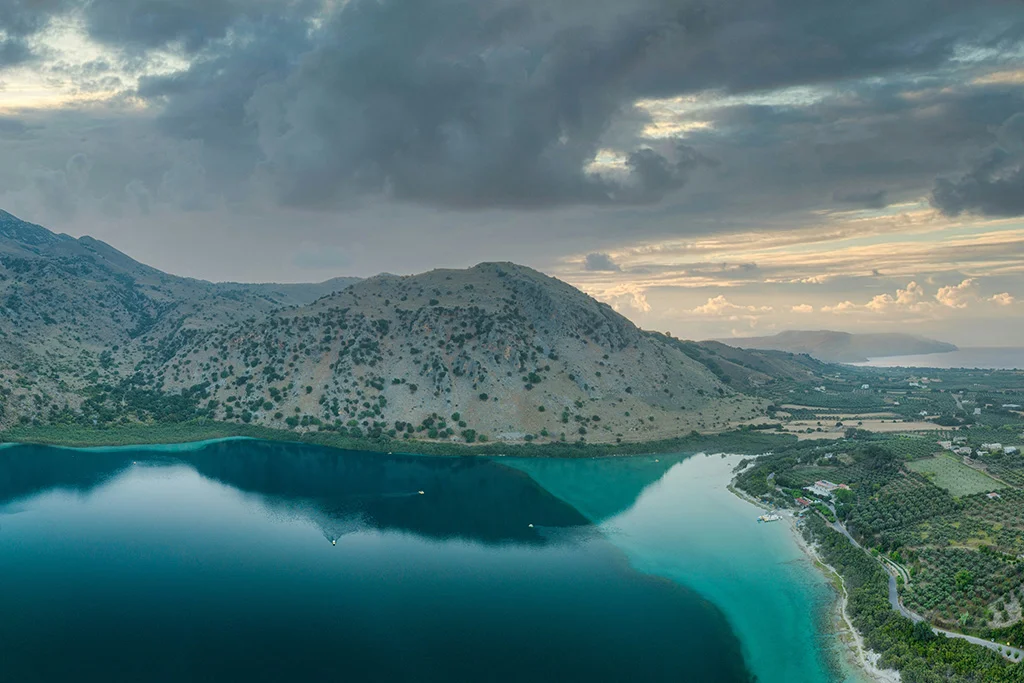
Lake Kournas, the only natural freshwater lake in Crete, is a breathtaking destination nestled at the base of the White Mountains and surrounded by lush green hills and fertile plains near Georgioupolis. This enchanting lake, with its shimmering blue-green waters, is not only a place of extraordinary natural beauty but also a hub of cultural and ecological significance, offering visitors a tranquil retreat from the island's bustling coastal areas.
The Setting and Natural Beauty
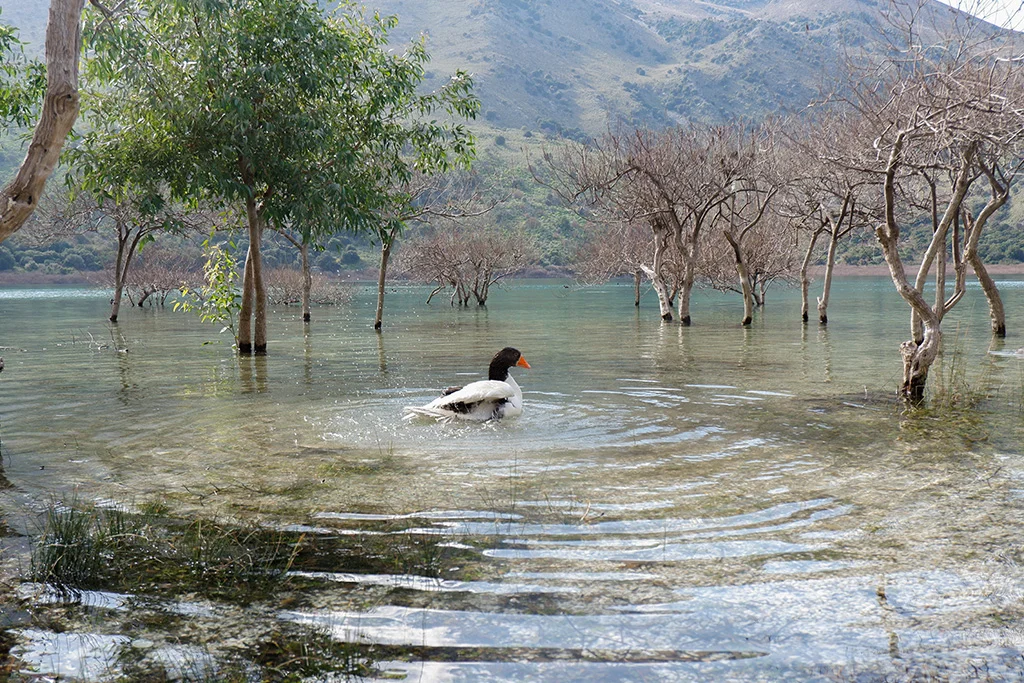
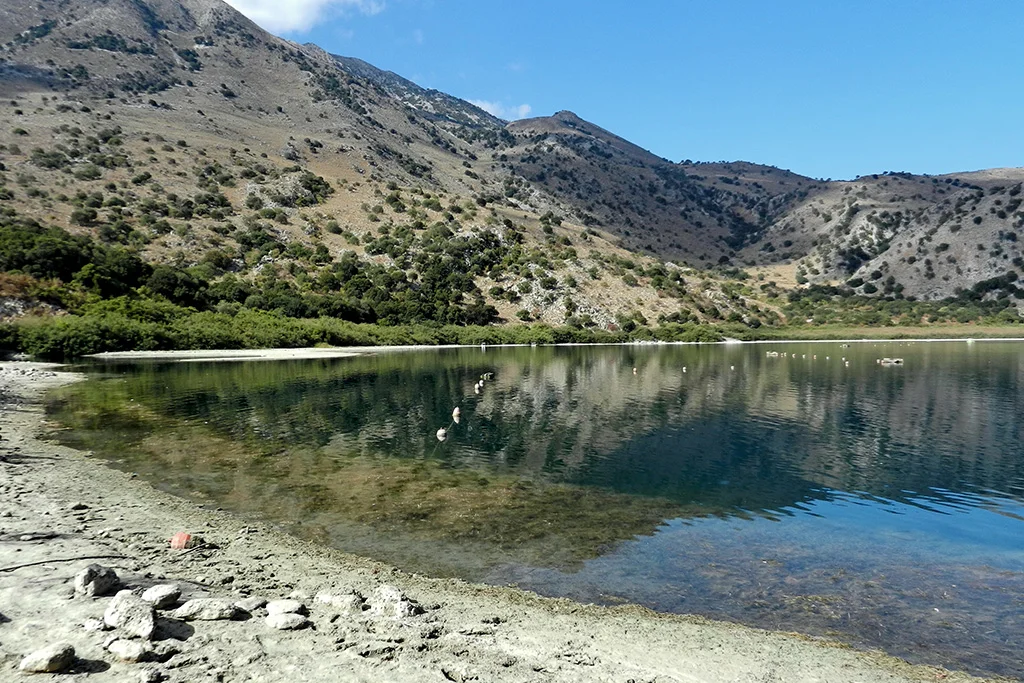
Lake Kournas is set in a picturesque valley that captures the essence of Crete’s rugged yet serene landscape. Measuring approximately 1,087 meters in length and 880 meters in width, the lake provides a tranquil haven with calm, crystal-clear waters that reflect the surrounding hills and mountains. Depending on the season, the water levels can fluctuate, revealing sandy shores ideal for leisurely strolls. The lake's clear waters are home to a variety of freshwater species, including small fish, turtles, and even rare species like eels, making it a natural wonder and an ecological treasure.
A Rich History and Mythology
The name “Kournas” is believed to derive from the Arabic word "kurna," meaning “lake” or “bowl,” a nod to its basin-like shape. In ancient times, the area was known as Korissia and was thought to be sacred, associated with water nymphs and local legends. One of the most enduring myths is the story of a nymph who is said to inhabit the lake. According to the tale, she appears on moonlit nights, adding an air of mystery and romance to the lake’s already magical ambiance.
Geological Significance
Lake Kournas is a karstic lake, formed by the dissolution of soluble rocks like limestone. Over time, underground water eroded the rock, creating the basin that holds the lake today. This process highlights the unique geological features of the Apokoronas region.
The Surrounding Area
Lake Kournas is conveniently located near several other attractions that can be included in your visit. The nearby village of Kournas is known for its traditional Cretan charm, narrow streets, and warm hospitality. Georgioupolis, a popular coastal village, is just a short drive away and offers beautiful beaches, cafes, and additional opportunities for exploration.
Local Legends and Myths
One famous legend speaks of a young girl who escaped an arranged marriage and sought refuge at the lake. She prayed for help, and the area was flooded, creating the lake. The girl is said to have transformed into a spirit that protects the lake to this day.
Things to Do at Lake Kournas
1. Enjoy the Natural Scenery
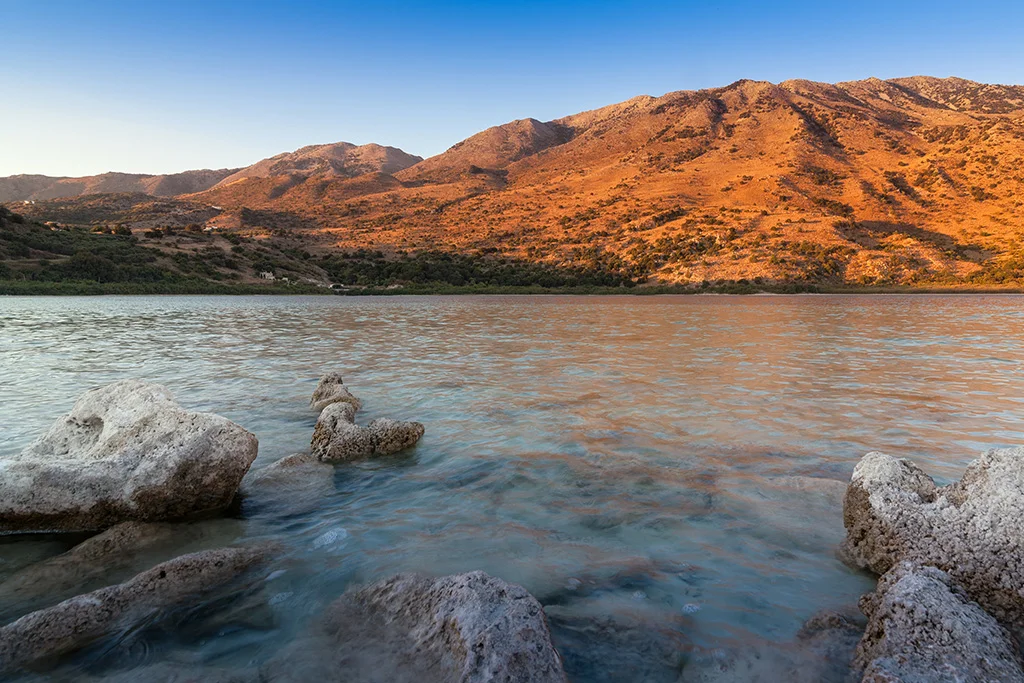
Lake Kournas is an ideal destination for nature enthusiasts and photographers. Visitors can spend hours taking in the stunning views of the lake and its surroundings, particularly during sunrise or sunset when the light creates mesmerizing reflections on the water.
2. Paddle Boating and Kayaking
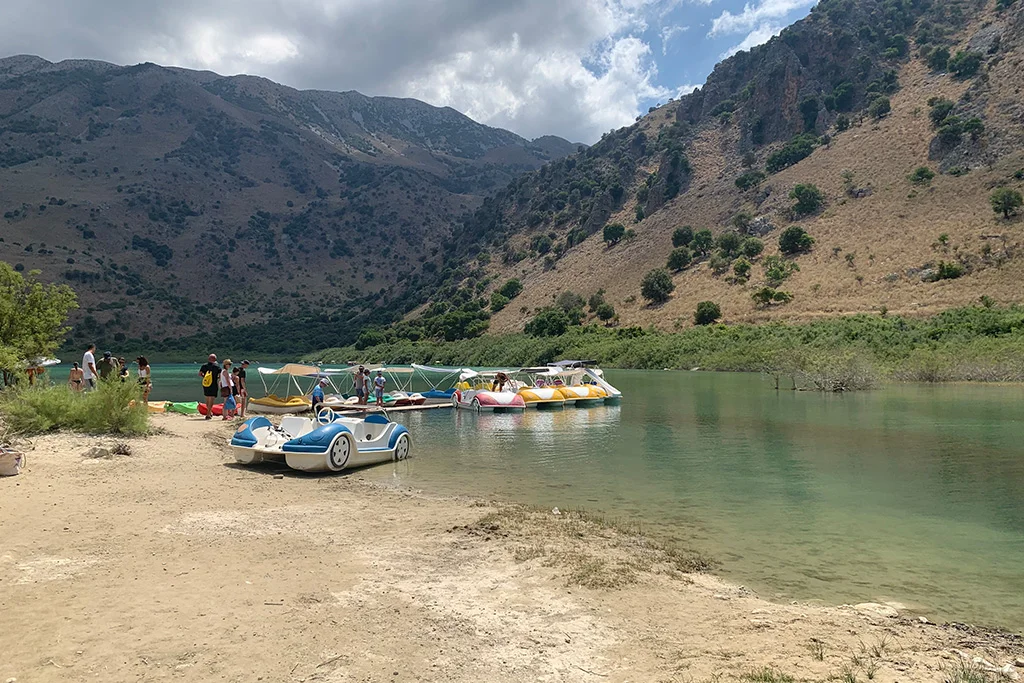
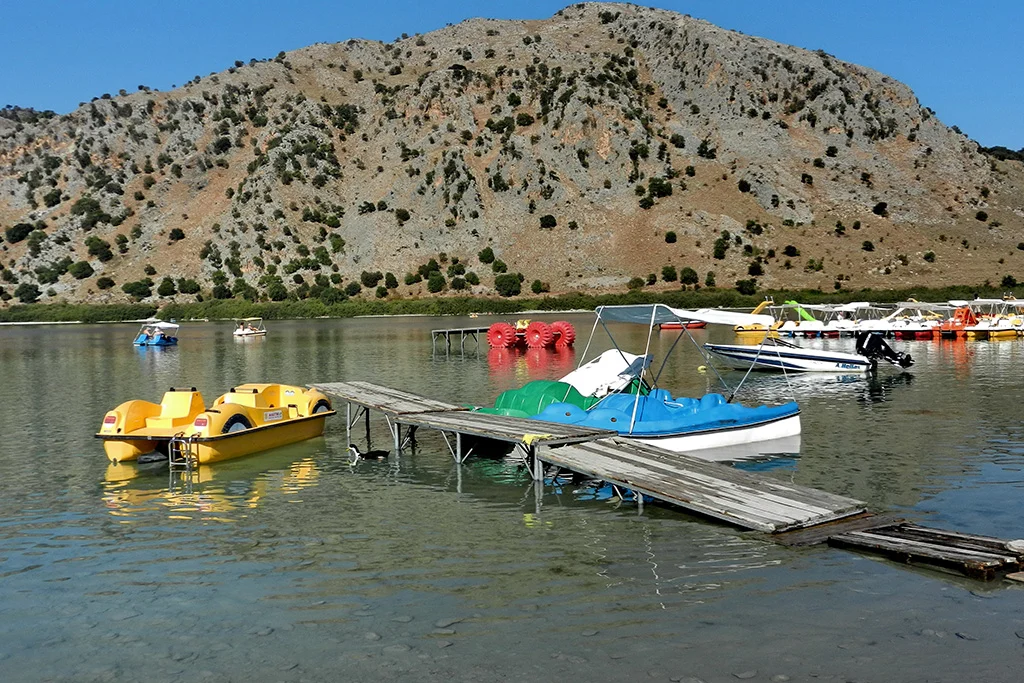
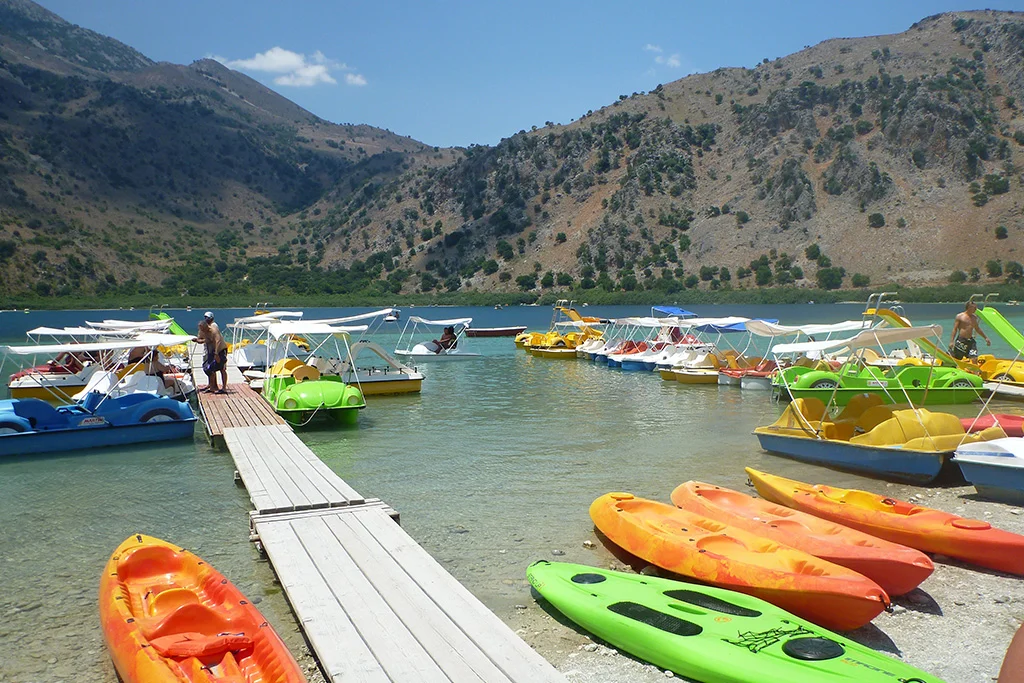
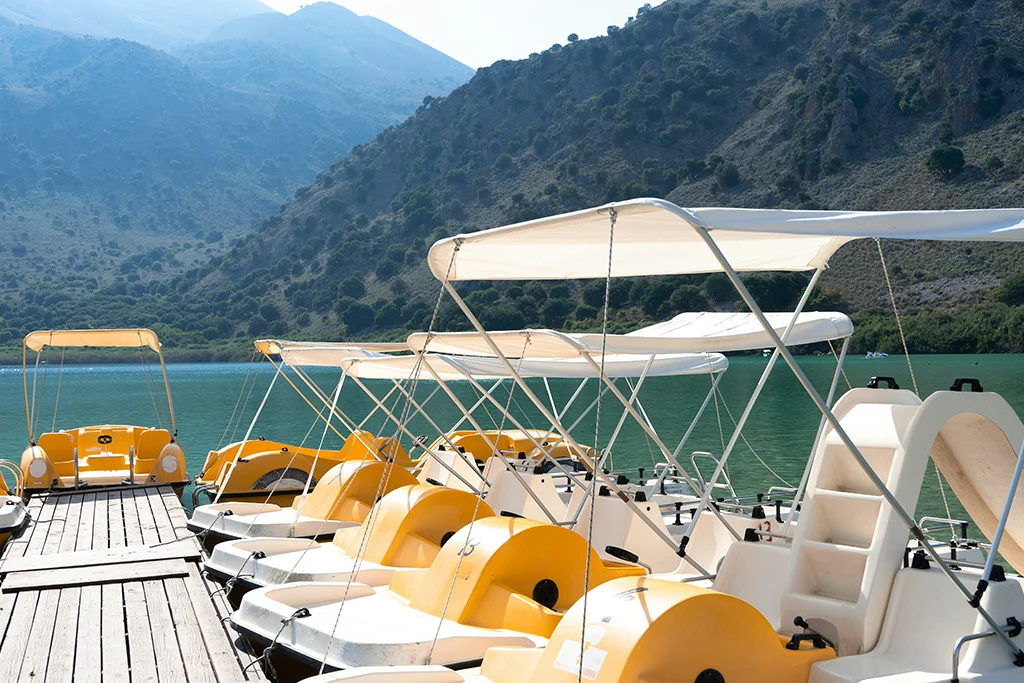
One of the most popular activities at the lake is renting a paddleboat or kayak. This allows visitors to explore the lake at their own pace, discover hidden corners, and get up close to the lake's wildlife, such as the unique terrapins that can often be seen sunbathing near the shore.
3. Swimming and Relaxation
The lake’s pristine waters are perfect for a refreshing swim during the warmer months. The calm surface and shallow areas near the shore make it suitable for families with children as well.
4. Hiking and Exploring
The area around Lake Kournas offers several hiking trails that lead through olive groves, rolling hills, and small villages. These trails are a great way to immerse yourself in the natural beauty of the region and discover local flora and fauna.
5. Local Taverns and Shops
Visitors can enjoy traditional Cretan cuisine at the taverns near the lake, where dishes are prepared using fresh, locally sourced ingredients. Many of these eateries offer lakefront dining, providing stunning views as you savor your meal. Nearby shops sell handmade crafts, local olive oil, and other products, perfect for souvenirs.
6. Birdwatching
The lake is a haven for birdwatchers, as it attracts a variety of bird species, especially during migration seasons. Bring your binoculars and enjoy spotting herons, ducks, and other aquatic birds.
Natural Facts and Features
- Size and Depth: Lake Kournas spans an area of approximately 579,000 square meters (57.9 hectares) and reaches a maximum depth of 22.5 meters, making it the deepest natural lake in Crete.
- Freshwater Source: The lake is fed by underground springs originating from the nearby mountains, ensuring its crystal-clear waters remain pristine year-round.
- Biodiversity: Lake Kournas is home to a rich ecosystem. Visitors can spot turtles, eels, and various fish species, as well as waterfowl and migratory birds. The lake also supports rare plant species that thrive in its freshwater environment.
Climate and Best Time to Visit
- Seasons: The lake is most vibrant during spring and autumn when the surrounding hills are lush and green. During summer, it becomes a popular retreat for both locals and tourists.
- Temperature: In summer, water temperatures range between 22°C and 26°C, making it ideal for swimming and other activities.
Why Visit Lake Kournas?
- Scenic Beauty: The lake’s picturesque setting, surrounded by mountains, creates a postcard-perfect landscape.
- Tranquility: Unlike crowded beaches, Lake Kournas offers a peaceful escape from the hustle and bustle of the island’s tourist hotspots.
- Accessibility: Located just a short drive from Rethymno and Chania, it’s easily accessible for a day trip.
- Family-Friendly: With shallow waters and plenty of activities, the lake is an ideal destination for families with children.
Interesting Facts
- Underground Rivers: The lake’s main water supply comes from underground rivers, which also connect to the Almyros River flowing into the sea.
- Seasonal Fluctuations: The water level rises during winter and recedes during summer, sometimes revealing a sandy beach.
- Protected Area: Lake Kournas is part of the Natura 2000 network, which protects ecologically significant sites in Europe.
How to Get There
- From Chania: 45-minute drive via the National Road (E75).
- From Rethymno: 25-minute drive south via the Old National Road.